


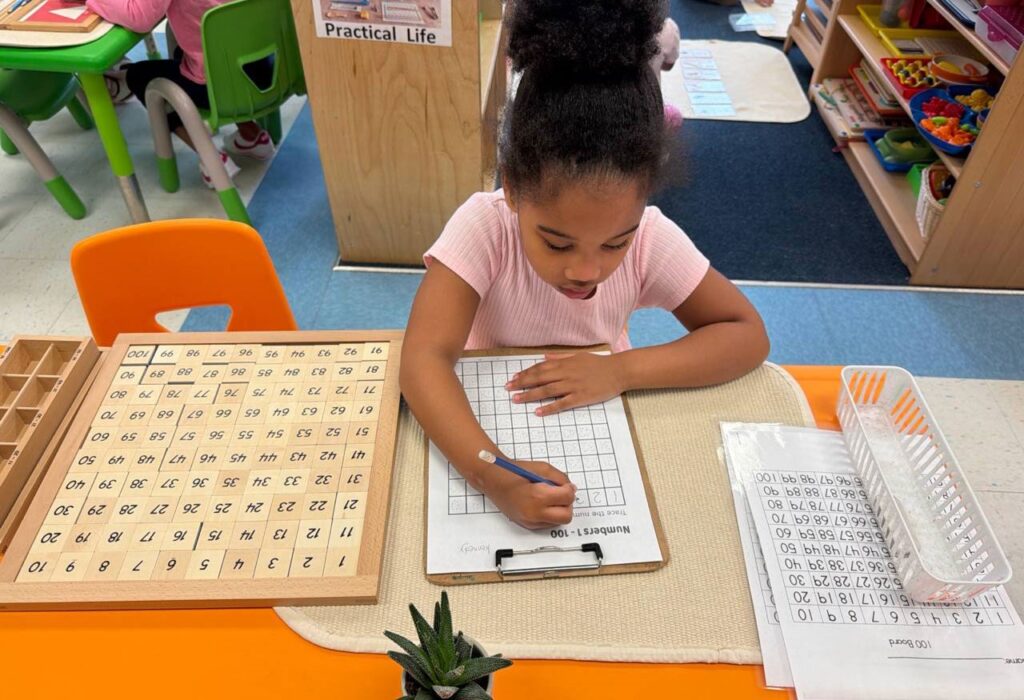
How Montessori Learning Builds Confidence, Independence, and Lifelong Success
Private Montessori education gives children a strong foundation for academic success, independence, and lifelong learning. Many parents choose Montessori schools because they offer personalized learning environments that support confidence, creativity, and problem-solving skills. In today’s changing world, private Montessori education helps prepare children for future challenges through hands-on learning and individualized guidance.
The Montessori Approach to Independent Learning
Montessori education, originally developed by Dr. Maria Montessori, is based on a deep understanding of child development and natural learning behavior. Unlike traditional classrooms where students often follow a fixed schedule and uniform instruction, Montessori education encourages children to learn through exploration, independence, and purposeful activity. This method respects the natural curiosity of children and helps them develop a lifelong love of learning.
Hands-On Learning in Montessori Classrooms
One of the most distinctive features of Montessori education is the prepared environment. Every classroom is carefully designed to support learning and independence. Furniture is child-sized, materials are accessible, and activities are arranged to invite exploration. Children move freely within the classroom, choosing work that interests them while teachers guide their progress. This environment allows children to develop self-discipline and confidence at an early age.
Another major strength of Montessori education is its emphasis on hands-on learning. Rather than relying only on textbooks or lectures, children work with specially designed materials that help them understand complex concepts through real experience. For example, mathematics is often introduced using physical materials such as beads and counting tools, allowing children to visualize and understand numbers before moving to abstract ideas. This approach strengthens comprehension and helps children build strong cognitive connections.
How Mixed-Age Classrooms Support Growth
Montessori classrooms also use mixed-age groupings, which create a collaborative and supportive learning environment. Younger children learn by observing older students, while older children develop leadership skills by helping their younger peers. This natural mentoring system encourages cooperation, respect, and confidence while reducing competition and pressure.
The Benefits of Smaller Class Sizes in Montessori Schools
Private Montessori schools often provide smaller class sizes, which means teachers can observe and guide each child more closely. Montessori educators are trained to carefully study each student’s development and introduce lessons when the child is ready. This individualized attention ensures that children are neither rushed nor held back, allowing them to progress at a pace that suits their abilities.
Why Montessori Builds Confidence and Independence
Beyond academics, Montessori education focuses strongly on practical life skills. Children participate in everyday activities such as organizing materials, preparing simple snacks, cleaning their workspace, and caring for their environment. These tasks may seem simple, but they help children develop responsibility, independence, and problem-solving abilities that will benefit them throughout life.
Another important advantage of Montessori education is its ability to develop concentration and deep focus. Traditional school environments often interrupt learning with frequent schedule changes or transitions. Montessori classrooms provide extended, uninterrupted work periods that allow children to fully immerse themselves in their activities. This deep concentration builds patience, persistence, and a strong sense of accomplishment.
Preparing Children for the Future with Montessori Education
In today’s rapidly changing world, education must prepare children for more than just memorizing information. The future demands creativity, adaptability, collaboration, and critical thinking. Montessori education naturally cultivates these abilities by encouraging children to ask questions, explore ideas, and develop solutions independently.
Private Montessori schools also often provide enriched learning experiences such as bilingual programs, cultural exploration, music, outdoor education, and hands-on science activities. These programs broaden children’s understanding of the world while nurturing curiosity and global awareness.
Perhaps the most important outcome of Montessori education is the development of confidence and independence. Children learn to make choices, take responsibility for their work, and believe in their ability to solve problems. This confidence becomes a powerful foundation that supports them through later academic challenges and life experiences.
Parents who choose private Montessori education are not only selecting a school; they are choosing an educational philosophy that respects the child, nurtures individuality, and builds lifelong learning habits. By providing a supportive and thoughtfully designed environment, Montessori education helps children develop the skills, character, and mindset needed to thrive in the future.
When children are given the freedom to explore, the guidance of trained educators, and the opportunity to learn at their own pace, they grow into confident learners who are prepared for the challenges and opportunities of the world ahead. Montessori education offers exactly that foundation, making it one of the most meaningful investments families can make in their child’s future.
——-
Plano location & contact:
📍 913 Lexington Dr., Plano, TX 75075
—-
McKinney location & contact:
📍 3801 Alma Rd., McKinney, TX 75070
—-
📞 +1 (682) 351 9492
——-
Leave a Reply